

Embedding AI in Product Roadmaps: An AI-Infused Approach
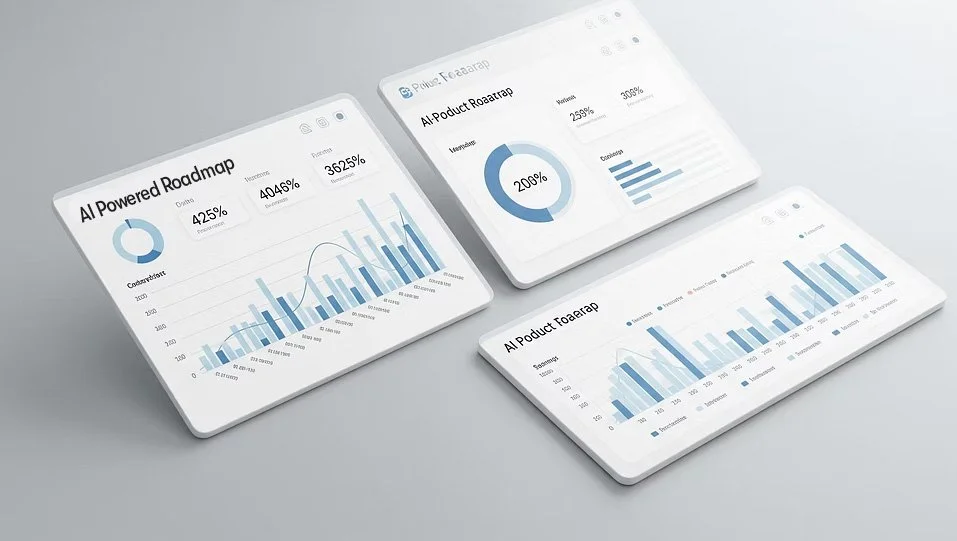
Smarter Roadmaps with AI Visualization
Transform your product roadmaps with AI-infused approaches that make them smarter and leverage advanced data analytics for strategic planning.

Adaptive Workflows for Modern Management
Adopt AI-driven strategies for a modern product management workflow, enabling more adaptive and responsive planning in today's dynamic environment.

Tuned to Customer Needs through AI
Utilize AI tools for strategic planning, ensuring your roadmaps are better tuned to customer needs and market insights in a complex world
Key Insights on Product Roadmaps
Vision Alignment
A roadmap should align your product vision with actual business goals.
Simple Process
Building one isn't complicated if you follow seven basic steps, from defining vision to sharing it widely and getting real feedback.
AI Enhancement
Templates and best practices are helpful, but AI-infused approaches make your roadmap smarter, more adaptive, and better tuned to customer needs.
What is a Product Roadmap?
Think of a roadmap as your product's North Star. It's a high-level visual plan showing where you're headed and why. It's not just a timeline or list of features. It's how you explain the "what" and "why" of the product to everyone involved.
When I first started managing products, I didn't fully get this. I treated the roadmap like a calendar of deadlines. Big mistake. The turning point came when I realized it's less about dates, more about direction, more about assuming variability and therefore more about emergence. Once that clicked, it became way easier to align teams and keep conversations focused around the flow of value.
Why Do You Need a Product Roadmap?
Without one, teams scatter. Engineers build what they think matters, sales promises features no one planned for, and marketing ends up confused. A roadmap stops that chaos. It's a single source of truth that shows what's coming and why.
It also sets expectations. When stakeholders can see the tradeoffs and priorities laid out, trust builds. People may not always agree, but at least they understand the reasoning.
Who Should Use a Product Roadmap?
It's not just for product managers. Executives want to see direction, engineers need clarity, and marketing needs to know what's coming. A roadmap becomes the bridge between technical and non-technical teams.
One of my favorite moments in product management was seeing a sales lead finally get excited about a roadmap presentation. He literally said, "Now I know what story to tell my customers." That's when you know it's working.
When Should You Build a Product Roadmap?
The best time? As early as possible. The worst time? Never.
That said, don't treat it as a "one and done." We're living in a BANI world (brittle, anxious, nonlinear, and incomprehensible). Markets shift, priorities change, new tech appears. The roadmap has to evolve. Locking it down too tightly makes it useless the second reality hits.
Product Roadmap vs. Product Strategy
Easy way to separate the two:
Product Strategy
The why and how. Market positioning, customer needs, long-term value.
Product Strategy
The why and how. Market positioning, customer needs, long-term value.
Mixing them up is a common mistake, but once you draw that line, it gets easier to communicate both clearly.
How to Build an AI-Infused Product Roadmap in 7 Steps

Define Your Vision and Strategy
What problem are you solving and for whom? Clearly articulate your product's direction and overarching business goals.
Set Goals and Objectives with OKRs
Be specific. For example: "Reduce churn by 20% in Q2" becomes a clear Key Result under the broader Objective of improving customer retention. OKRs make goals measurable, connect daily work with strategy, and align teams around value.

Identify Initiatives
Pinpoint major efforts like launching a feature, entering a market, or reworking UX. Frameworks like Jeff Patton's story mapping help visualize the customer journey and identify initiatives that meet real user needs.
Prioritize Initiatives
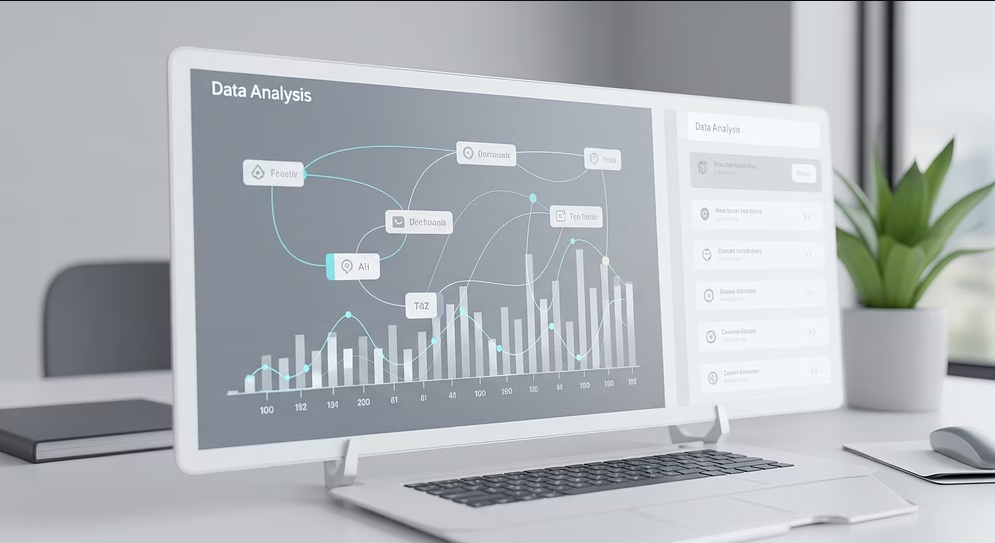
Use WSJF (Weighted Shortest Job First) to clarify tradeoffs. AI infusion assists by crunching large datasets (like customer usage, churn signals, and support tickets), ensuring prioritization is data-backed, not just gut feeling.
Choose a Format
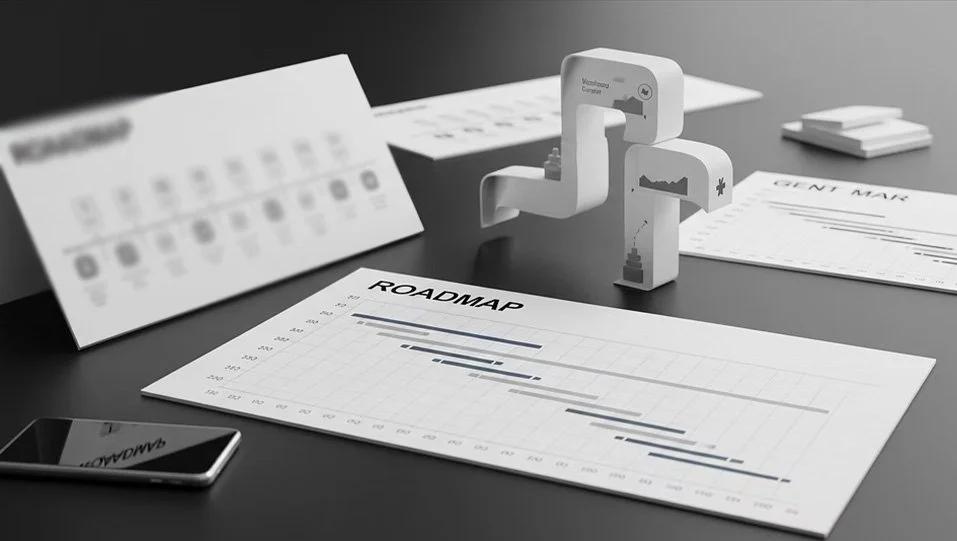
Select a format that suits your audience—be it a timeline, Kanban board, or Gantt chart. The key is clarity and accessibility for all stakeholders.

Share It Widely
A roadmap is useless if it's hidden. Make it visible and accessible across the organization to foster alignment and shared understanding among all teams.

Gather Feedback and Refine
Actively seek input from sales, support, engineering, and leadership. AI-infused tools can summarize feedback, cluster themes, and surface insights, keeping the roadmap adaptive and relevant to evolving customer needs.
Personal Case Study: The Road to a Successful Product Launch
On one project, I was handed a struggling software product. No roadmap, no direction, just scattered efforts.
➥ Defining the Vision: We sat down as a team and empathized more with customer pain points, focusing more on moments that matter. The biggest one? Clunky UX. So we made usability our North Star.
➥ Setting Goals: One clear goal: cut support tickets by 30% in six months. That became our rallying point, not just as a metric but as a way to measure whether we were improving the flow of value to customers.
➥ Prioritizing Initiatives: We mapped out initiatives like UI redesign and feedback loops. Prioritization was tough, but using WSJF helped us cut through opinions and see which work delivered the highest impact relative to effort.
➥ Sharing the Roadmap: I presented it company-wide. The energy changed overnight. Marketing, sales, and engineering finally had the same story. What made it even better was the feedback that came pouring in—sales pointed out gaps in customer communication, support highlighted quick wins we hadn't considered, and engineering flagged dependencies that helped us refine timelines. The roadmap got sharper and more realistic because everyone had a chance to shape it.
Six months later, support tickets dropped 35%. More importantly, the team finally felt like we were rowing in the same direction and delivering more consistent value flow to customers.
Best Practices
Customer Focus
Keep customers at the center, especially by focusing on moments that matter.
Living Document
Treat the roadmap as a living document that assumes variability and allows for emergence.
Over-communicate
Communicate roadmap updates and rationale frequently and clearly to all stakeholders.
Data-Driven Decisions
Use data to guide decisions, moving beyond gut feelings for prioritization.
Strategic Alignment
Always tie initiatives back to overarching business goals and product strategy.
Value-Based Prioritization
Apply WSJF consistently to keep prioritization grounded in delivering maximum value, not just opinions.
Active Feedback
Actively gather and act on feedback, as it sharpens the roadmap and keeps it relevant.
Focus on Value Flow
Keep conversations focused around the flow of value, not just features or deadlines. Story mapping aids this by connecting user journeys to roadmap priorities.
Examples & Templates
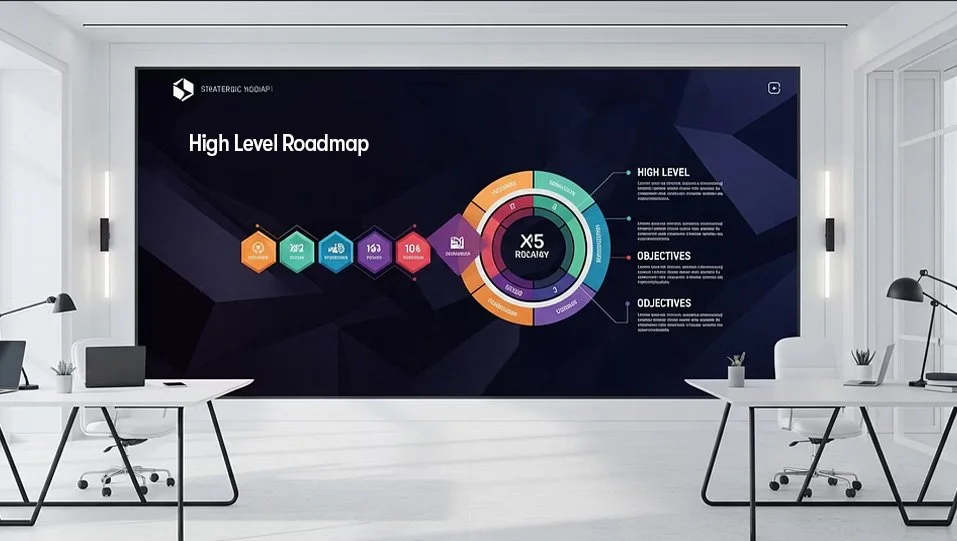
Strategy Roadmap
Focuses on the high-level vision and strategic initiatives that drive the product forward.
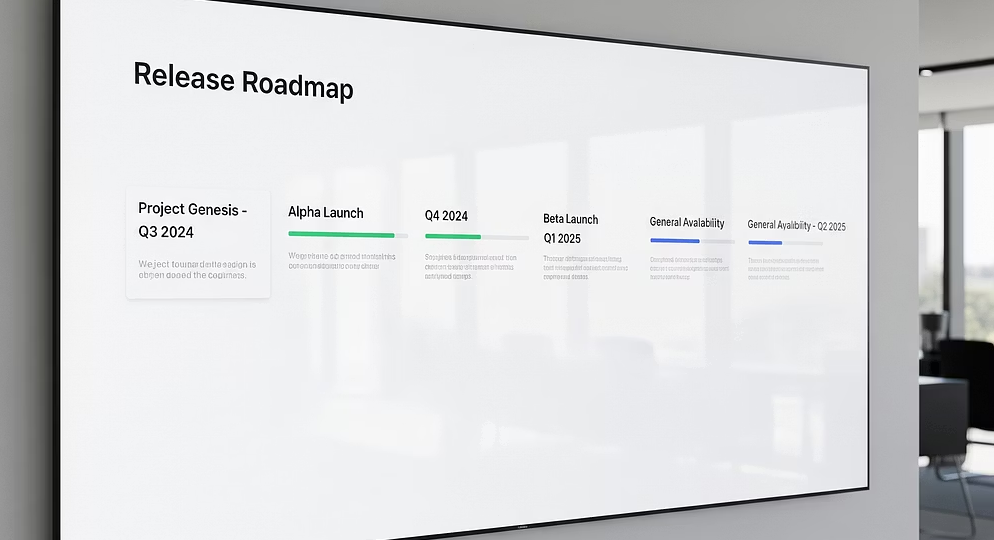
Release Roadmap
Details features and improvements slated for upcoming releases, providing a more granular view.

Timeline Roadmap
Provides a detailed view with specific dates and milestones, useful for coordinating dependencies.
Templates save time. Start with one and customize. At the same time, don't overlook frameworks like Jeff Patton's story mapping. Story maps help teams visualize the customer journey and break down features into meaningful slices of value. They work well alongside roadmaps because they keep the conversation grounded in user experience, not just dates and deliverables.
Tools
For years, the company had invested heavily in customizing Rally. While it got the job done, the cost and complexity were tough to justify long term. What's proving more efficient, and far more economical, is building with custom GPTs and refined prompts. This approach makes it easier to generate roadmap variations, adapt messaging for different stakeholders, and surface data-driven priorities on demand.
The real advantage? Budget that was once tied up in tool customization can now be reallocated to agentic AI. These AI agents don't just display roadmaps. They interpret them, flag risks, and even suggest course corrections before problems escalate. It's a shift from static reporting to active decision support, powered by AI infusion into day-to-day product management.
Wrapping Up
A roadmap isn't just a product manager's artifact. It's a communication tool for the entire company. In today's BANI world, roadmaps need to assume variability and leave space for emergence. Add AI infusion with pods, and you're not just managing tasks, you're anticipating needs and adapting faster. At the end of the day, it's all about the customer, and building around the moments that matter is what keeps a product competitive. Story mapping is a great complement to this, since it keeps the flow of value visible across teams. And remember, a roadmap is only as strong as the feedback it absorbs. The more you share it, test it, and refine it, the more useful it becomes. Keep teams aligned around the flow of value, and you'll have a roadmap that actually drives impact.
Quick Questions
➥ What are pods?
Small, cross-functional teams focused on AI integration.
➥ How can AI help?
By turning data into clearer decisions and priorities, and by keeping teams aligned around the flow of value.
➥ Who benefits?
Product teams, leadership, and customers—all gain from enhanced clarity and efficiency.
➥ What are the challenges?
Potential hurdles include skills gaps, resource allocation, and integration complexities.
➥ How to convince your team?
Demonstrate how AI pods reduce confusion, accelerate iteration, and improve value flow across the product lifecycle.
Better, sooner, safer, responsibly — at a sustainable pace. Let’s shape your AI journey together.